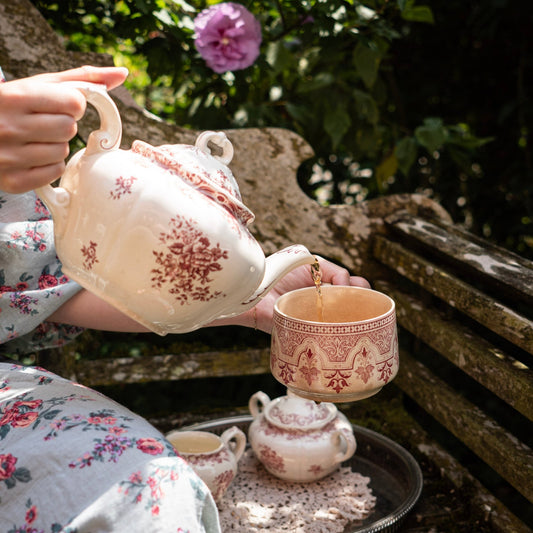

Welcome!

The Twelveth Day of Christmas
"Twelve Drummers Drumming"
On the twelfth day of Christmas, "Trommelwirbel" - the drumroll - the night of nights arrives.
This is Christmas Eve as we keep it here in Switzerland (and across much of the German-speaking world): the table laid as dusk gathers, the room quietly expectant.
Out come the favourites - Spode “Rockingham” with its delicate sprays and gilded rims - stacked and ready beside silver cutlery and freshly pressed linen napkins.
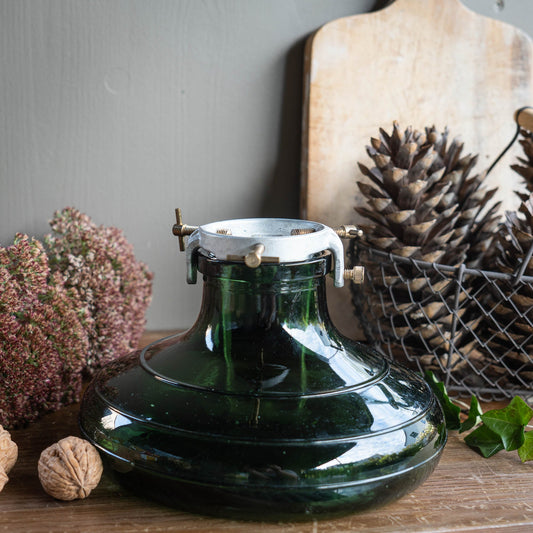
The little tree stands close by in its iconic Bülach glass stand, a handful of old glass ornaments waiting in a small cluster like jewels before the ceremony.
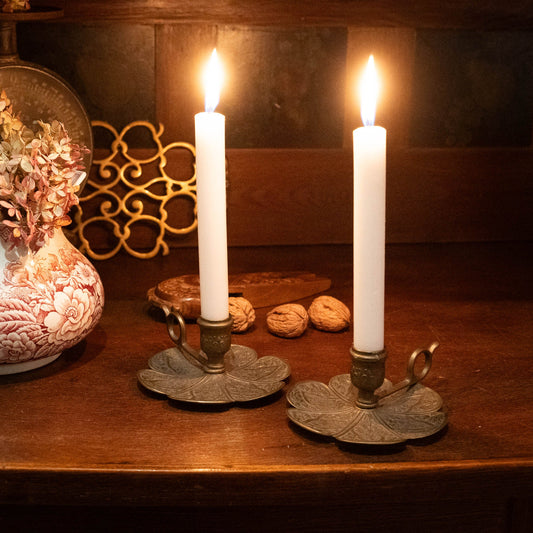
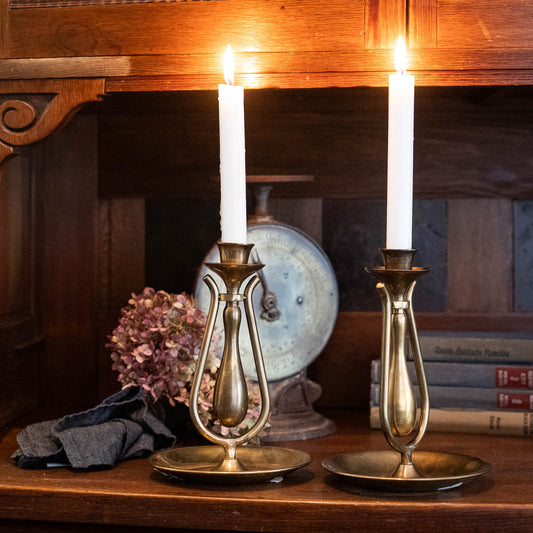
Red candles are set into their brass holders, ready to be pinned to the branches and kindled one by one.
If Day Eleven was the fanfare, Day Twelve is the drumbeat itself: a steady rhythm of tradition and light, a table prepared for warmth, stories, and the first slice passed around.
Here, the carol comes to rest - not with noise, but with the gentle pageantry of a family feast, everything in its place, everything shining.
-
Christmas Tree Stand - Style 520, Regular Size - 1940s Swiss "Bülach Glas"
Vendor:Bülach GlasRegular price CHF 60.00Regular priceUnit price per -
Set of Two Brass Candleholders - Italy - Early 20th Century
Vendor:The Vintage TalesRegular price CHF 73.00Regular priceUnit price per -
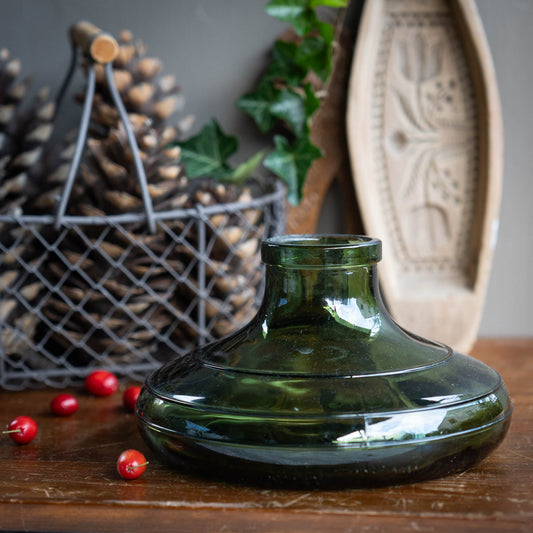
Christmas Tree Stand - Size Mignon - 1940s Swiss "Bülach Glas"
Vendor:Bülach GlasRegular price CHF 55.00Regular priceUnit price per




The Eleventh Day of Christmas
"Eleven Pipers Piping"
On the eleventh day of Christmas, the carol turns metallic.
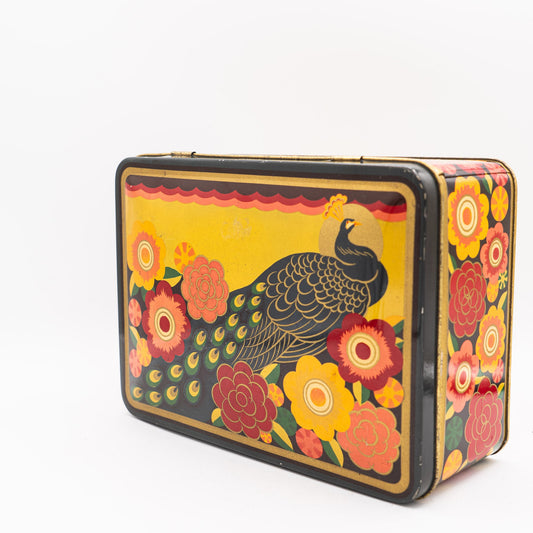
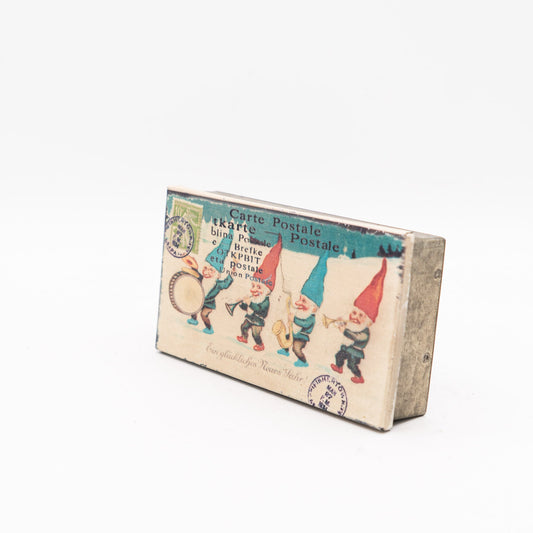
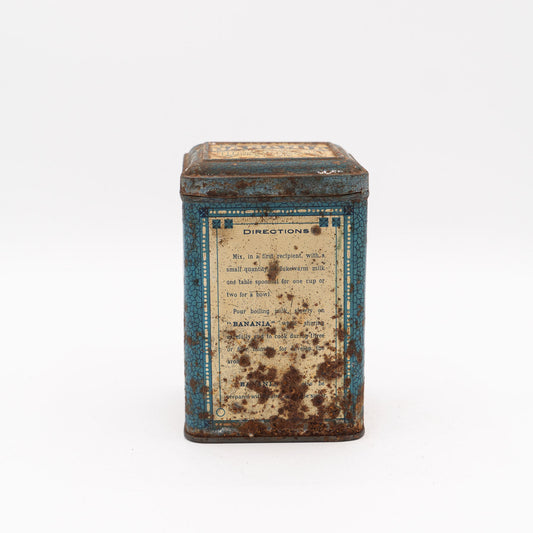
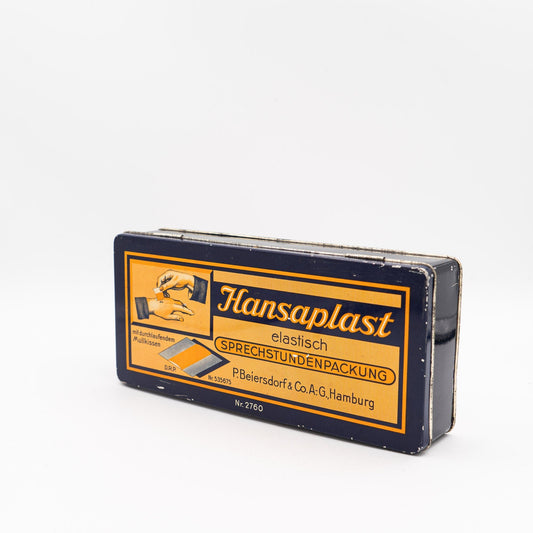
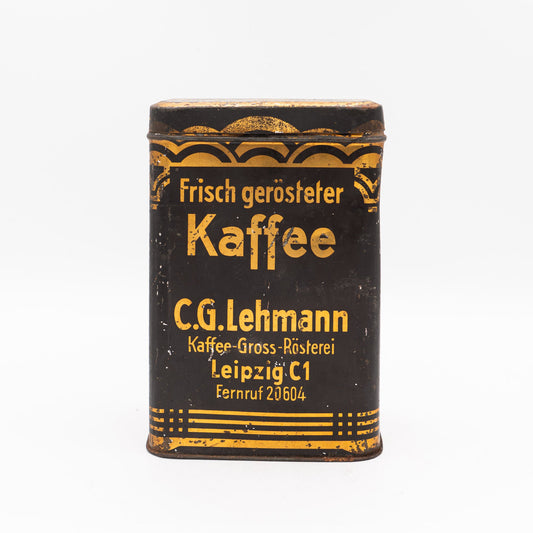
"Eleven Pipers Piping" becomes a chorus of polished brass and tin: vintage advertising tins striking bright notes on the tabletop - Banania, Hansaplast, Yardley and friends - with brass candleholders keeping time in a warm, steady glow.
As Christmas draws near, a small fir has taken its place in a Swiss Bülach glass stand from the 1940s, that iconic green footing the tree with quiet poise.
Spread before it, traditional lead ornaments wait to be hung - tiny memories ready to chime.
If yesterday was a leap, Day Eleven is a fanfare: metal, light, and colour giving the room its festive rhythm.
-
Christmas Tree Stand - Style 520, Regular Size - 1940s Swiss "Bülach Glas"
Vendor:Bülach GlasRegular price CHF 60.00Regular priceUnit price per -
Vintage Peacock & Flowers Cookie Tin - Op Art - 1960/70s
Vendor:The Vintage TalesRegular price CHF 48.00Regular priceUnit price per -
Postcard Souvenir Tin with Gnome Band - 1930s
Vendor:The Vintage TalesRegular price CHF 32.00Regular priceUnit price per -
BANANIA Advertising Tin - Rederie d’Amiens Find - 1930s/40s
Vendor:The Vintage TalesRegular price CHF 42.00Regular priceUnit price per -
Hansaplast Advertising Tin (Doctor’s Office Pack) – Beiersdorf, Hamburg – c. 1950
Vendor:The Vintage TalesRegular price CHF 58.00Regular priceUnit price per -
Lehmann Kaffee Advertising Tin, Leipzig - Black & Gold - 1940s–50s
Vendor:The Vintage TalesRegular price CHF 65.00Regular priceUnit price per -
Set of Two Vintage Swivel Candlestands - Brass - 1950s
Vendor:The Vintage TalesRegular price CHF 135.00Regular priceUnit price per -
Set of Two Brass Candleholders - Italy - Early 20th Century
Vendor:The Vintage TalesRegular price CHF 73.00Regular priceUnit price per -
Christmas Tree Stand - Size Mignon - 1940s Swiss "Bülach Glas"
Vendor:Bülach GlasRegular price CHF 55.00Regular priceUnit price per







The Tenth Day of Christmas
"Ten Lords A-Leaping"
On the tenth day of Christmas, the verse asks for height and motion.
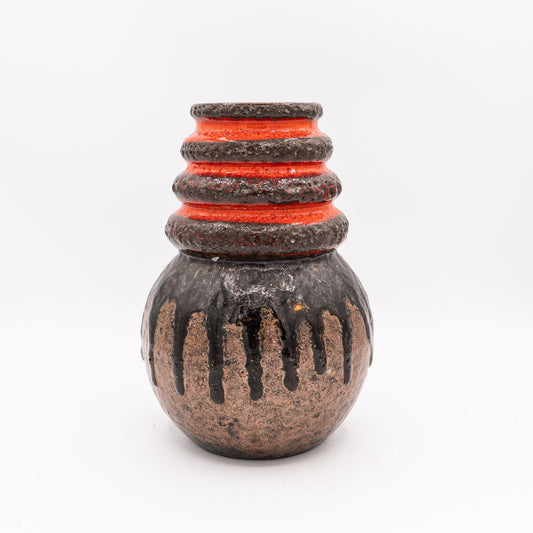
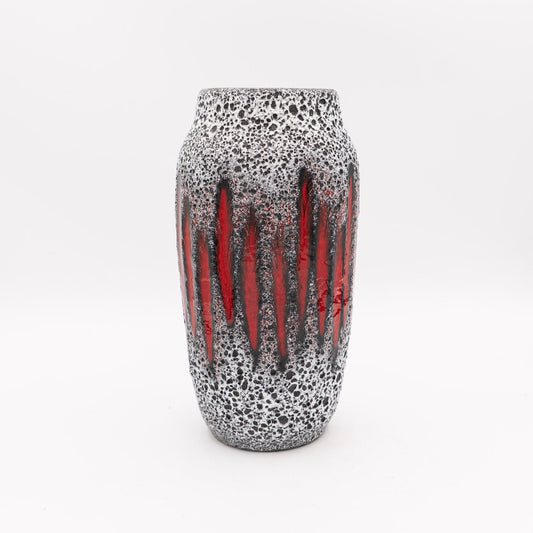
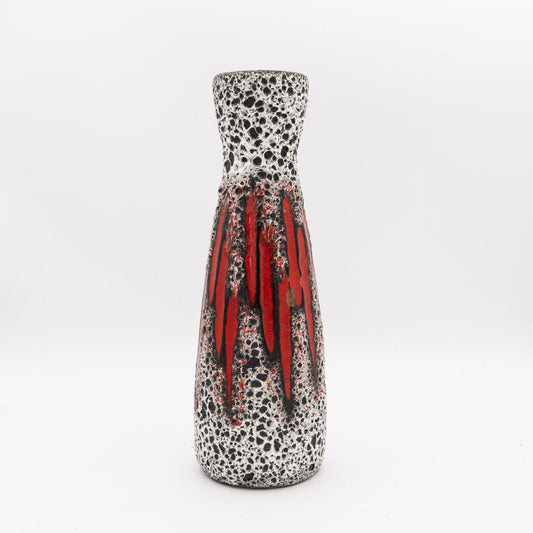
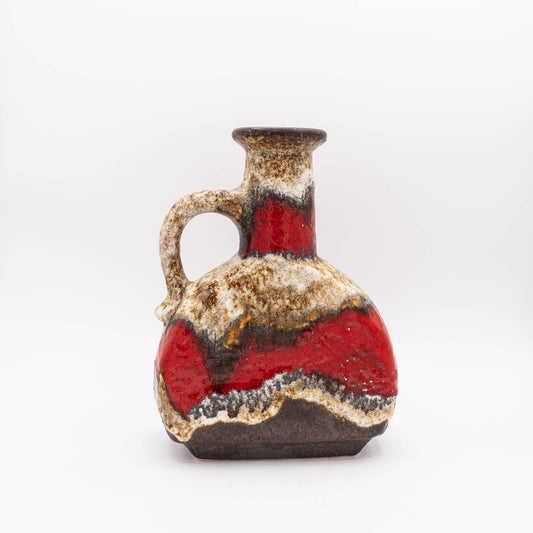
Here, Ten Lords a-Leaping becomes a burst of mid-century West German “fat lava” ceramics - lamp bases and vases whose surfaces seem to jump and flow like cooled magma.
Produced across the 1960s–70s by celebrated factories and studios (among them Scheurich, Bay, Carstens, Dümler & Breiden, Jasba, and others), these pieces marked a leap in glaze innovation: thick volcanic drips, cratered foams, and lunar textures created with layered slips, frits, and oxides.
The palette - ember reds, ash greys, charcoal blacks, honey ochres, and ice whites - reads like geology on the table.
While the look sits apart from my usual English cottage and French country rhythms, the values are the same: craftsmanship, material honesty, and everyday utility, reimagined for a new era. Fat lava is highly collectible today because each object is effectively a small landscape — a record of heat, gravity, and chance.
If Day Nine was the ladies’ dance, Day Ten is the leap itself: energy held in clay, tradition landing in the modern world.
-
Orange Band & Black Lava Drip - Scheurich 269-22 - West Germany, 1970s
Vendor:ScheurichRegular price CHF 79.00Regular priceUnit price per -
Mid-Century "Lora" West German Fat Lava - Scheurich 242-22 - 1970s
Vendor:ScheurichRegular price CHF 94.00Regular priceUnit price per -
Mid-Century "Lora" - Scheurich 520-28 - 1970s
Vendor:ScheurichRegular price CHF 98.00Regular priceUnit price per -
Stunning Mid-Century Dümler & Breiden 603 Vase, 1970s
Vendor:Dümler & BreidenRegular price CHF 240.00Regular priceUnit price per





The Nineth Day of Christmas
"Nine Ladies Dancing"
On the ninth day of Christmas, the bustle of the kitchen gives way to an afternoon waltz.
Yesterday the maids set the table; today the ladies gather - cups lifted, music somewhere in the next room.
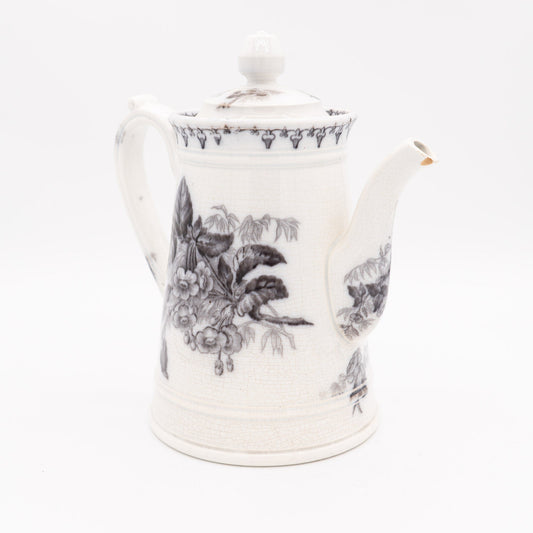
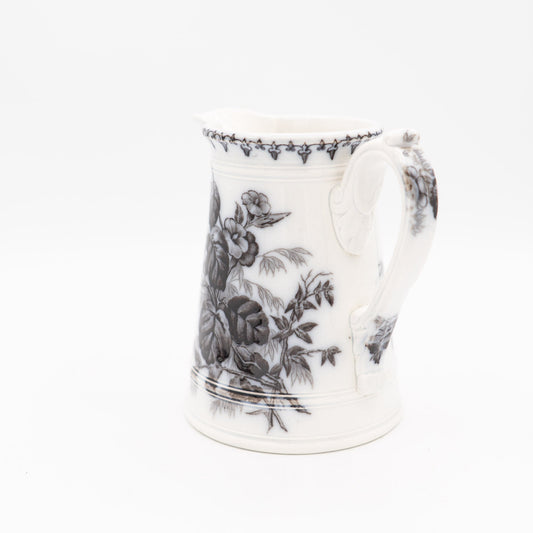
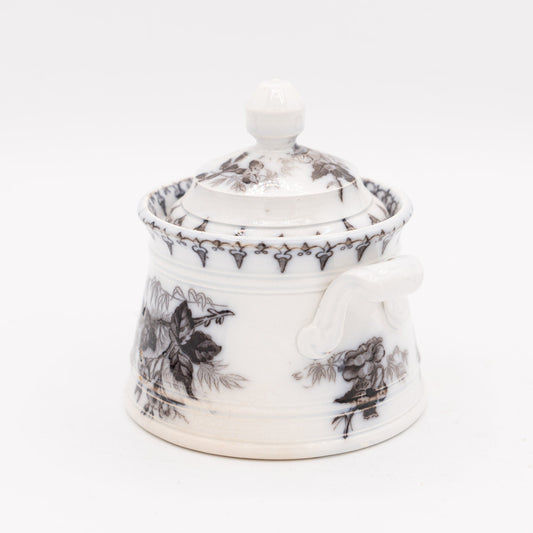
The service is Sarreguemines “Flores” (c.1900): tea and milk pot, sugars, cups and saucers, the monochrome blossoms poised like embroidery on winter linen.
Cakes are sliced and waiting, a candle burns steadily, and the table is trimmed with vintage German glass ornaments that catch the light as if they, too, were dancing.
It’s the heart of the Adventszeit - inviting, anticipatory, warm - a small ceremony of friendship before the season opens its doors.
-
Antique French Teapot - Black Transferware “Flore" - U&C Sarreguemines - 1880s
Vendor:SarregueminesRegular price CHF 68.00Regular priceUnit price per -
Antique French Milk Jug - “Flore" - U&C Sarreguemines - 1880s
Vendor:SarregueminesRegular price CHF 68.00Regular priceUnit price per -
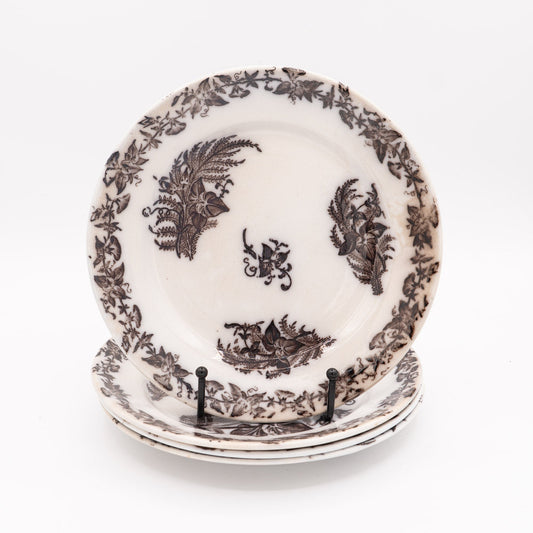
Antique 'Flow Brown' Plates - "Liseron" - FF Pexonne - Set of 4 - 1890s
Vendor:FF PexonneRegular price CHF 128.00Regular priceUnit price per -
Antique French Sugar Bowl - “Flore" - U&C Sarreguemines - 1880s
Vendor:SarregueminesRegular price CHF 58.00Regular priceUnit price per





The Eighth Day of Christmas
"Eight Maids a-Milking"
On the eighth day of Christmas, the song steps into the kitchen.
Eight maids a-milking becomes the gentle bustle of laying the table: cups counted, milk warmed, jars fetched from the pantry.
At the centre sits a cluster of Sarreguemines pieces — “Flores” cups and lidded sugars from the early 1900s — joined by kindred Pexonne companions, their crisp blue-grey garlands made for bread-and-butter mornings.
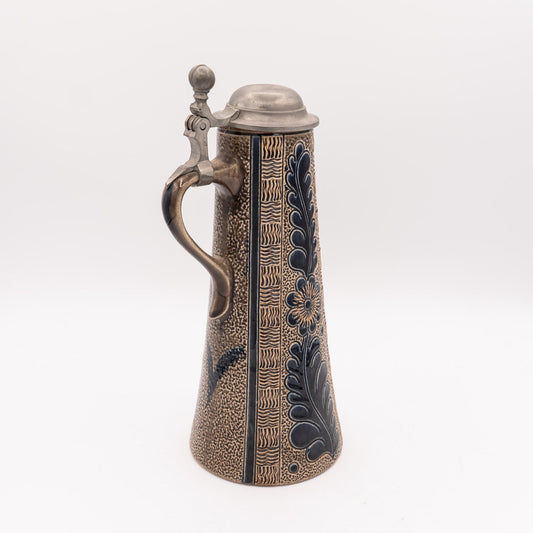
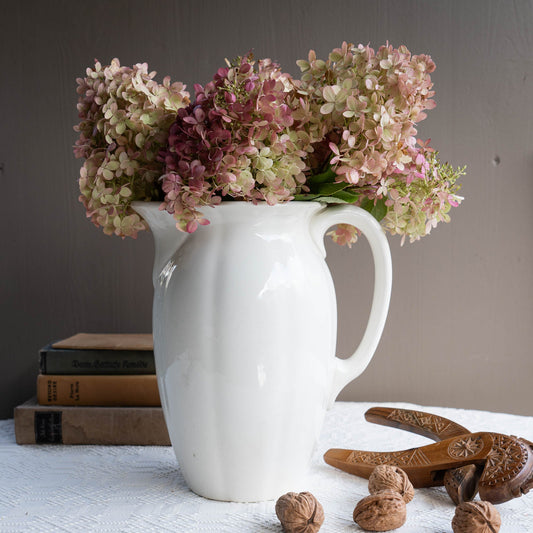
A snow-white pitcher stands ready, flanked by three Marzi & Remy salt-glazed stoneware jugs from the mid-century; sturdy, handsome forms that feel at home in any decade.
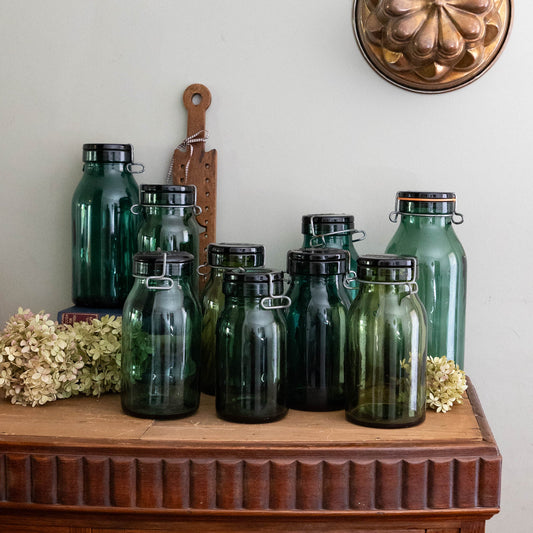
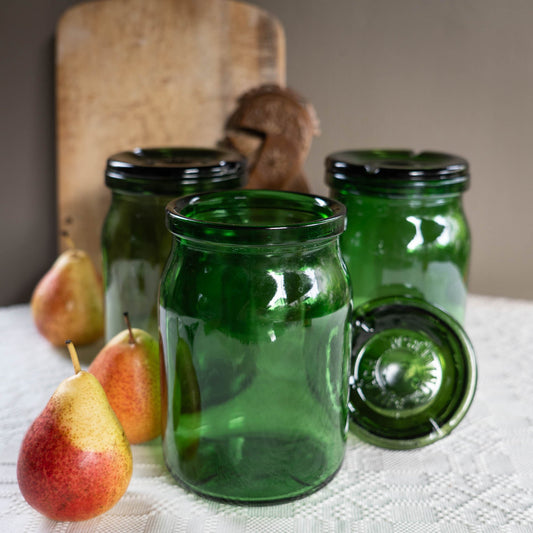
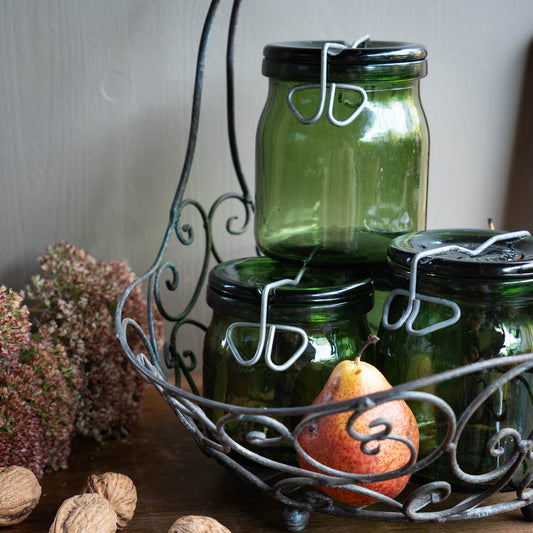
To one side, the unmistakable greens of Bülach storage glass (Switzerland, 1940s) wait to be pressed into service - iconic, versatile, still as useful today as when they first brightened pantries.
Carved wooden boards and moulds round out the scene with a note of homeliness, while a beeswax candle keeps watch for the first pour of the day.
If Day Seven was evening calm in glass, Day Eight is morning rhythm: a busy tabletop that resolves into harmony — useful things gathered with love, ready to serve, ready to share.
-
1940s Swiss "Bülach Glas" Preserving Jars
Vendor:Bülach GlasRegular price From CHF 32.00Regular priceUnit price per -
Wide Opening 1 Litre - 1940s Swiss "Bülach Glas" Preserving Jars
Vendor:Bülach GlasRegular price CHF 42.00Regular priceUnit price per -
Wide Opening 1/2 & 3/4 Litre - 1940s Swiss "Bülach Glas" Preserving Jars
Vendor:Bülach GlasRegular price From CHF 38.00Regular priceUnit price per -
Antique French Teapot - Black Transferware “Flore" - U&C Sarreguemines - 1880s
Vendor:SarregueminesRegular price CHF 68.00Regular priceUnit price per -
Antique French Milk Jug - “Flore" - U&C Sarreguemines - 1880s
Vendor:SarregueminesRegular price CHF 68.00Regular priceUnit price per -
Mid-Century Salt-Glazed Bierstein with Pewter Lid - Marzy Remy - 1960s
Vendor:Marzy & RemyRegular price CHF 88.00Regular priceUnit price per -
Antique French Sugar Bowl - “Flore" - U&C Sarreguemines - 1880s
Vendor:SarregueminesRegular price CHF 58.00Regular priceUnit price per -
Antique 'Flow Brown' Plates - "Liseron" - FF Pexonne - Set of 4 - 1890s
Vendor:FF PexonneRegular price CHF 128.00Regular priceUnit price per -
Rare Antique Large Ironstone Pitcher - Villeroy & Boch - c1920s
Vendor:Villeroy & BochRegular price CHF 149.00Regular priceUnit price per






The Seventh Day of Christmas
"Seven Swans A-Swimming"
On the seventh day of Christmas, the verse drifts to water and grace.
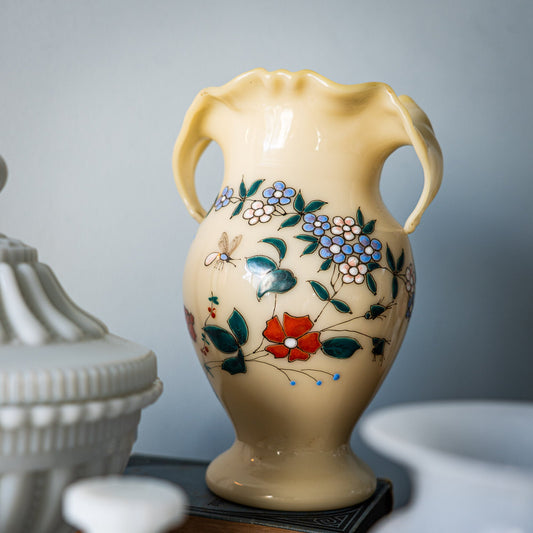
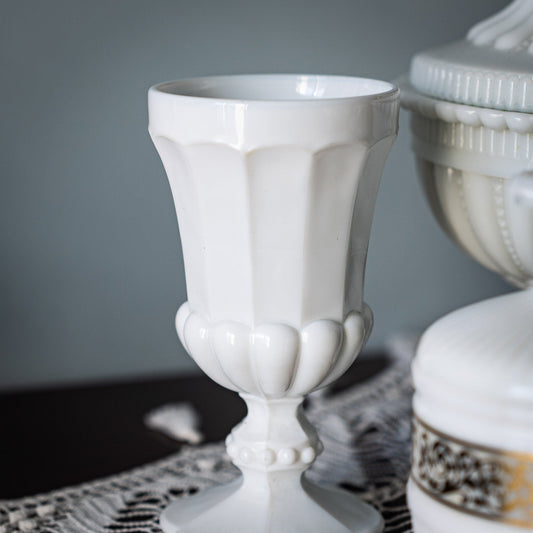
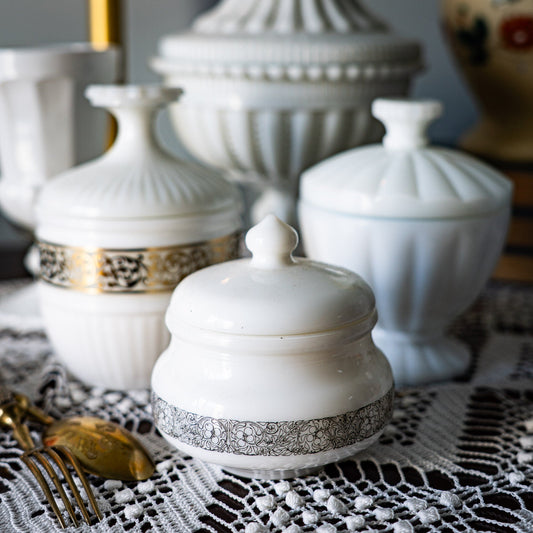
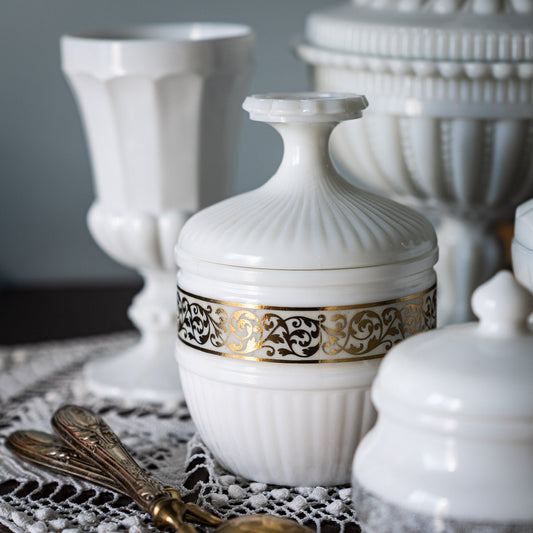
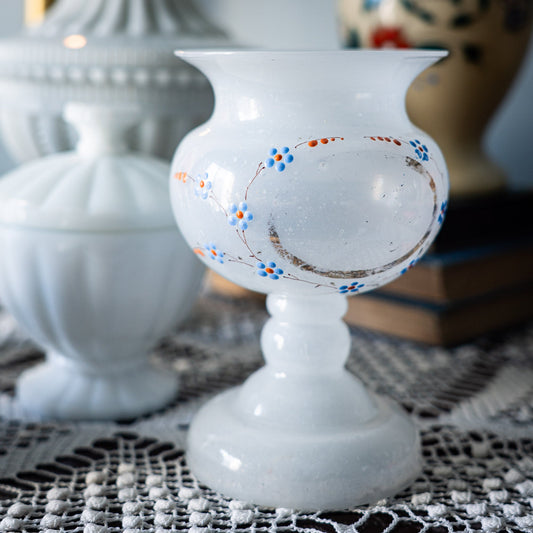
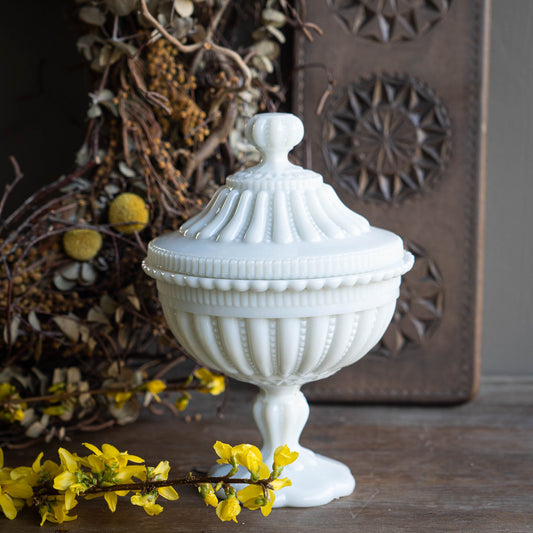
“Seven swans a-swimming” arrives here as a flotilla of French opaline - seven pieces in milky glass whose soft lustre feels like moonlight on a pond.
Most are empire-style covered jars and vases, many by Portieux Vallérysthal, with ribbed domes, pedestal feet, and that unmistakably French poise.
Six are cool and swan-white, serene as lilies; the seventh is a golden beauty that brings a gentle glow to the group, like sun slipping across still water.
Lace, candlelight, and a quiet palette let the forms do the talking: beaded rims, neat finials, elegant necks.
If Day Six was the comfort of breakfast, Day Seven is evening calm: glass that gathers light, silhouettes that glide, and a classic French style that never loses its composure.
-
French Opaline Two-Handled Vase - Jaune Jonquille - 1890s
Vendor:The Vintage TalesRegular price CHF 189.00Regular priceUnit price per -
French Opaline Chalice Vase (Lobed & Beaded) – 1910s
Vendor:Portieux VallérysthalRegular price CHF 55.00Regular priceUnit price per -
French Opaline Lidded Trinket Jar – Art-Nouveau Scroll Band – 1900s
Vendor:Portieux VallérysthalRegular price CHF 45.00Regular priceUnit price per -
French Opaline Covered Jar with Gilt Scroll Frieze - 1910s
Vendor:Portieux VallérysthalRegular price CHF 65.00Regular priceUnit price per -
French Milk Glass Posy Vase - Forget-me-nots - 1880s
Vendor:The Vintage TalesRegular price CHF 89.00Regular priceUnit price per -
French White Opaline Lidded Candy Bowl - Portieux Vallérysthal - 1930s
Vendor:Portieux VallérysthalRegular price CHF 80.00Regular priceUnit price per







The Sixth Day of Christmas
"Six Geese a-Laying"
On the sixth day of Christmas, the carol turns to nests and new beginnings.
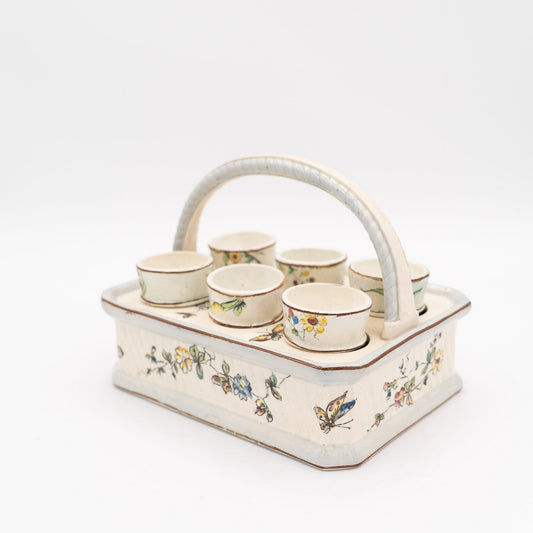
“Six geese a-laying” becomes a single, much-loved treasure: a French egg carrier with six removable cups, found at a country marché aux puces in Alsace and kept close for a while before I could part with it.
Hand-painted flowers and butterflies wander over a warm cream glaze; the handle arches like a basket bough. The cups are dainty (far too petite for goose eggs, of course) but perfect for soft-boiled hens’ eggs and unhurried winter mornings.
Fine crazing and gentle wear speak of kitchens long before ours - breakfasts laid, hands warmed, stories shared.
If Day Five was a toast in gold, Day Six is a hush at daybreak: usefulness made beautiful, patience made visible, a small ceremony of care.
-
Antique French Egg Carrier with Six Hand-Painted Egg Cups - late 19th Century
Vendor:The Vintage TalesRegular price CHF 190.00Regular priceUnit price per


The Fifth Day of Christmas
"Five Golden Rings"
On the fifth day of Christmas, the carol turns to gilding and glow.
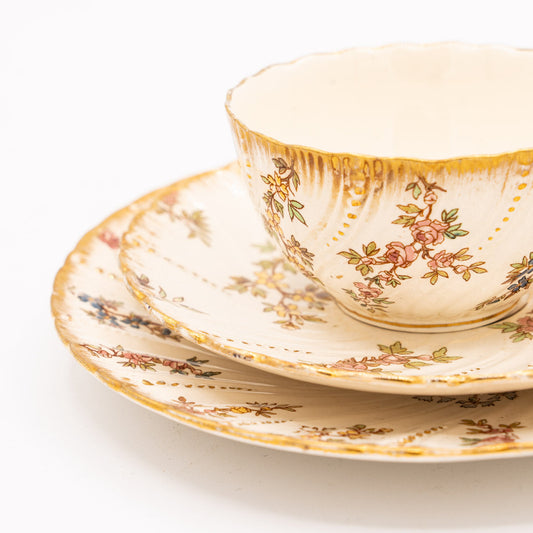
Here, the “five golden rings” are five tea sets, their rims catching candlelight like halos.
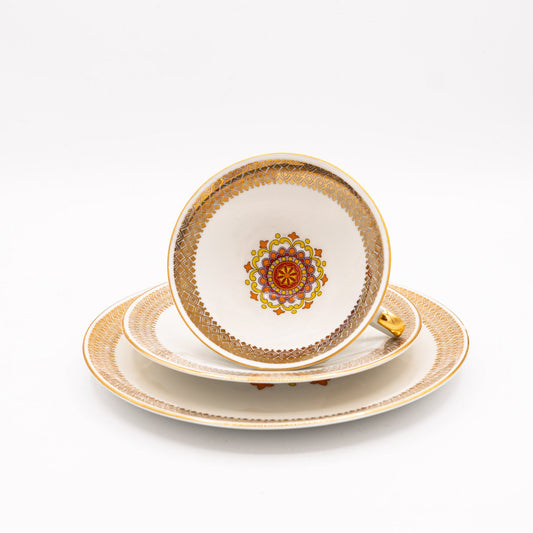
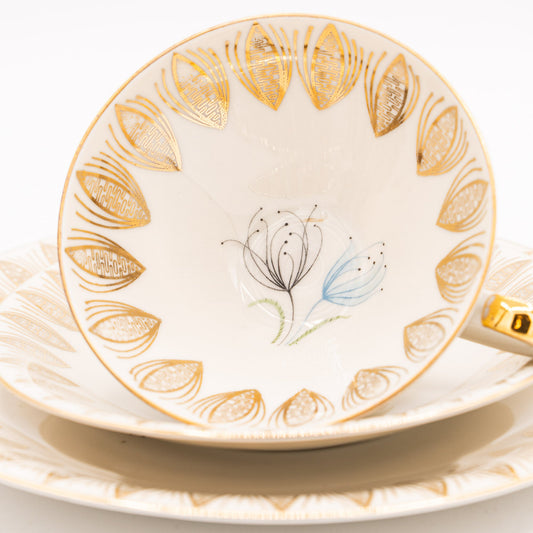
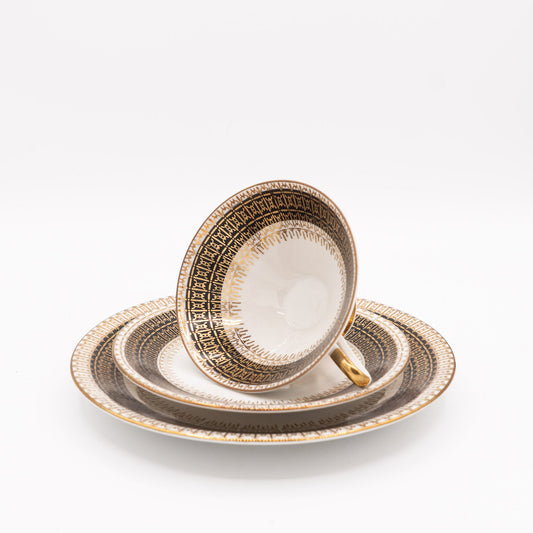
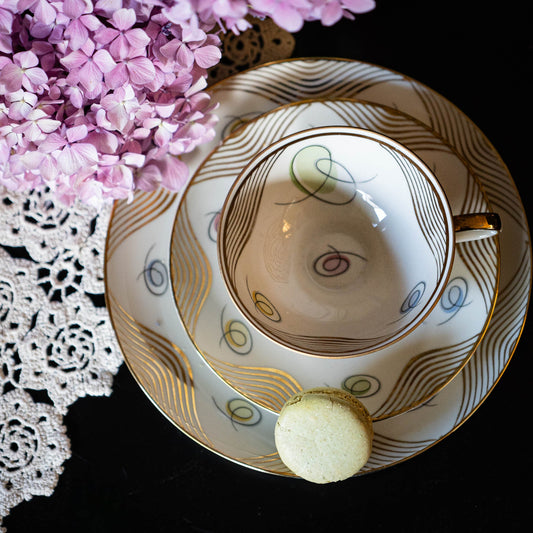
Four are mid-century Bavarian Sammeltassen - those beloved collectible trios of cup, saucer, and side plate that flourished in the 1950s–60s, given for birthdays and weddings, proudly displayed in glass cabinets and brought out for Sunday cake. Their gold bands and lyrical patterns speak of elegance made everyday.
The fifth ring is a story apart: Sarreguemines “Louis XV” - French grace in rococo scrolls and warm gilding. To me, this classic line feels like the ancestor of mid-century glamour: an older melody that the Bavarian sets picked up and made newly modern.
If Day Four was birdsong at supper, Day Five is a toast in gold - five shining circles, five invitations to pause, pour, and celebrate.
-
Antique “Louis XV” Trio - Cup, Saucer & Cake Plate - Sarreguemines - 1900s
Vendor:SarregueminesRegular price CHF 139.00Regular priceUnit price per -
Mid-Century Teacup, Saucer and Plate Set - Orange Mandala - Winterling Röslau - 1950s
Vendor:WinterlingRegular price CHF 44.00Regular priceUnit price per -
Mid-Century Teacup, Saucer and Plate Set - Gold & Florals - Winterling Röslau - 1950s
Vendor:WinterlingRegular price CHF 44.00Regular priceUnit price per -
Mid-Century Teacup, Saucer and Plate Set - Black & Gold - Winterling Röslau - 1950s
Vendor:WinterlingRegular price CHF 44.00Regular priceUnit price per -
Mid-Century Teacup, Saucer and Plate Set - Winterling Röslau - 1940s
Vendor:WinterlingRegular price CHF 44.00Regular priceUnit price per






The Fourth Day of Christmas
"Four Calling Birds"
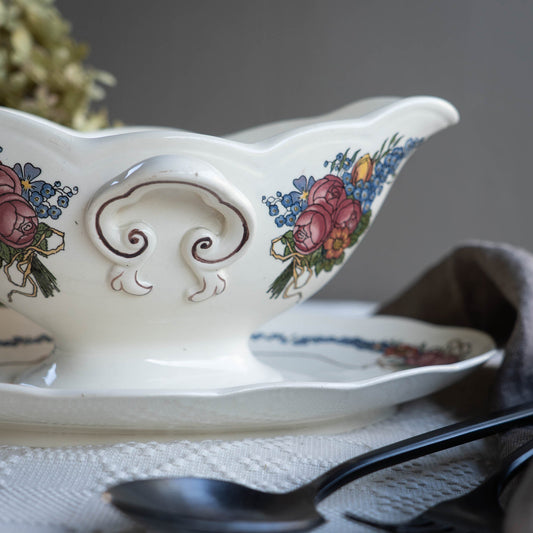
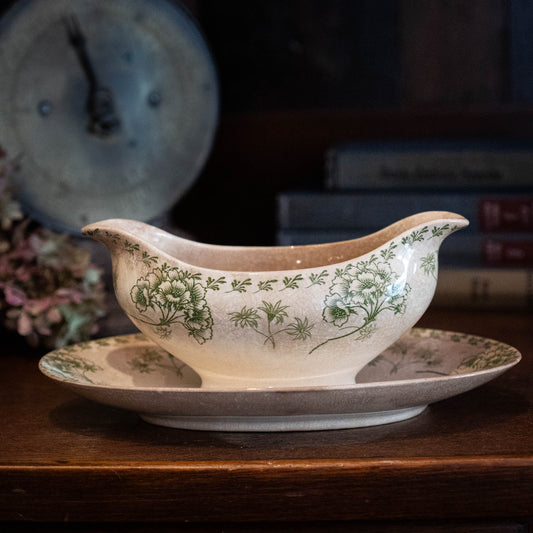
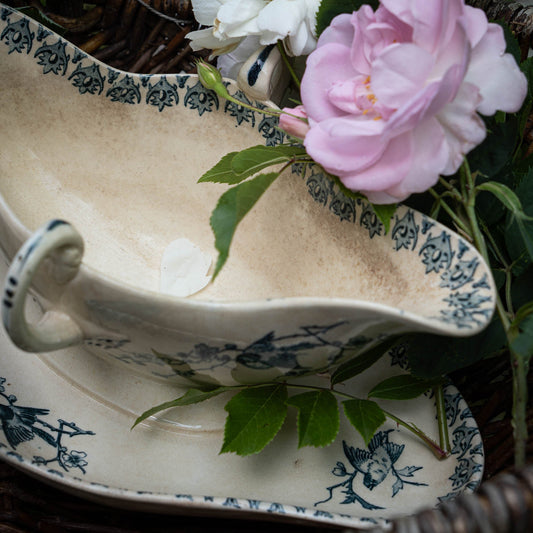
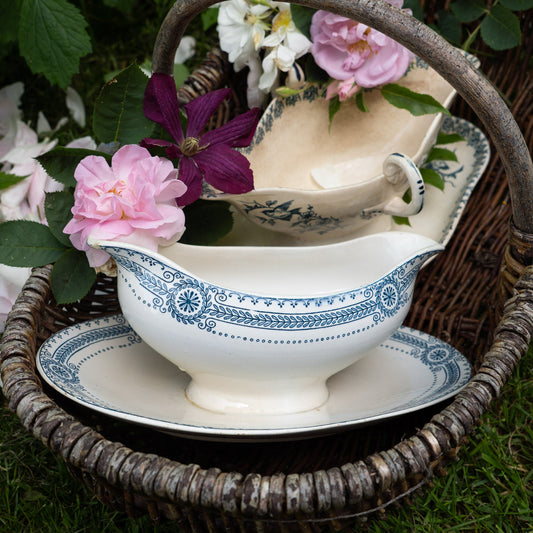
On the fourth day of Christmas, the song becomes a quartet. To stand in for the calling birds, I’ve gathered four French saucières that might as well be feathered: spouts like beaks, handles like tails, each perched on its saucer and ready to sing.
From the turn of the century, a Sarreguemines “Carina” in Empire blue brings classical poise, while an elegant H. B. & Cie, Choisy-le-Roi boat carries a rim of little sparrows mid-flight. Two floral voices from Sarreguemines (c. 1940s and 1950s) add warmth - one softly crazed with that gentle patina we love.
Together, they read like a small aviary at the table: four forms, four patterns, one cheerful refrain.
If Day Three was a chorus at breakfast, Day Four is a birdsong at supper - graceful service pieces calling everyone to gather.
-
Floral Gravy Boat - Obernai - Sarreguemines - c1940s
Vendor:SarregueminesRegular price CHF 69.00Regular priceUnit price per -
Antique Green Flowery Gravy Boat with Crazing - Sarreguemines - 1900s
Vendor:SarregueminesRegular price CHF 67.00Regular priceUnit price per -
Antique Blue Gravy Boat with Sparrows - H.B. & Cie, Choisy-Le-Roy - 1900s
Vendor:Choisie-Le-RoiRegular price CHF 77.00Regular priceUnit price per -
Antique Gravy Boad - "Carina" - Sarreguemines - 1900s
Vendor:SarregueminesRegular price CHF 67.00Regular priceUnit price per





The Third Day of Christmas
"Three French Hens"
On the Third Day of Christmas, we turn to France and to monochrome elegance.
Our “Three French Hens” are a perfectly poised trio in black and white: a mid-19th-century sucrière (likely the oldest piece in the shop), a characterful moutardier, and a comforting café-au-lait bowl - the quiet poetry of the French kitchen distilled.
Behind them, a set of “flow brown” Liseron plates by FF Pexonne adds a soft sepia halo, their delicate bindweed vines curling like winter hedgerows.
Together, these pieces read as a morning tableau: bread still warm, coffee steaming, a spoon resting where conversation paused. If Day Two was a duet, Day Three is a chorus — three voices, one melody, sung in porcelain.

The Second Day of Christmas
"Two Turtle Doves"
On the second day of Christmas, the companionship takes centre stage.
Today’s tableau is entirely Herend, the beloved Hungarian royal porcelain company: led by the cherished Rothschild birds - two companions poised among boughs and butterflies, an elegant echo of "Two Turtle Doves".
Around them gather kindred Herend accents: three Pink Apponyi pieces lending a soft cranberry blush, and a floral, heart-shaped little box like a keepsake of winter affection. Gilded rims catch the candlelight; crisp white porcelain sets the stage for branch, feather, and flower to speak in gentle tones.
If Day One was a welcome perch, Day Two is a duet - bird to bird, cup to saucer, heart to hand.

The First Day of Christmas
"A Partridge in a Pear Tree"
On the first day of Christmas, a partridge found its perch. Our centrepiece is a "Coalport" platter alive with the quiet charm of that winter visitor, framed by flowering branches that read like a Victorian parlour scene.
Around it gathers a Villeroy & Boch “Valeria” trio from the 1920s, their rose-pink transfer a soft blush against creamy glaze, ready for tea by candlelight.
Completing the ensemble, an early Utzschneider & Cie. (Sarreguemines) ewer brings French grace to the table, its floral scrolls echoing orchard vines. Together these cross-Channel pieces - English, German, and French - create a gentle orchard story: bird and bough, blossom and fruit, refuge and warmth.
A tableau for the season’s first verse, where hospitality is the tree and the partridge is the promise of home.
VVG The Twelve Days of Christmas - Collection
-
Pink Floral Transferware Tea Pot "Valeria" - Villeroy & Boch - 1920s - Late Victorian / Edwardian revival tradition
Vendor:Villeroy & BochRegular price CHF 69.00Regular priceUnit price per -
Vintage Peacock & Flowers Cookie Tin - Op Art - 1960/70s
Vendor:The Vintage TalesRegular price CHF 48.00Regular priceUnit price per -
Postcard Souvenir Tin with Gnome Band - 1930s
Vendor:The Vintage TalesRegular price CHF 32.00Regular priceUnit price per -
BANANIA Advertising Tin - Rederie d’Amiens Find - 1930s/40s
Vendor:The Vintage TalesRegular price CHF 42.00Regular priceUnit price per -
Hansaplast Advertising Tin (Doctor’s Office Pack) – Beiersdorf, Hamburg – c. 1950
Vendor:The Vintage TalesRegular price CHF 58.00Regular priceUnit price per -
Lehmann Kaffee Advertising Tin, Leipzig - Black & Gold - 1940s–50s
Vendor:The Vintage TalesRegular price CHF 65.00Regular priceUnit price per -
Christmas Tree Stand - Size Mignon - 1940s Swiss "Bülach Glas"
Vendor:Bülach GlasRegular price CHF 55.00Regular priceUnit price per -
Orange Band & Black Lava Drip - Scheurich 269-22 - West Germany, 1970s
Vendor:ScheurichRegular price CHF 79.00Regular priceUnit price per -
Mid-Century "Lora" West German Fat Lava - Scheurich 242-22 - 1970s
Vendor:ScheurichRegular price CHF 94.00Regular priceUnit price per -
Mid-Century "Lora" - Scheurich 520-28 - 1970s
Vendor:ScheurichRegular price CHF 98.00Regular priceUnit price per -
Antique French Teapot - Black Transferware “Flore" - U&C Sarreguemines - 1880s
Vendor:SarregueminesRegular price CHF 68.00Regular priceUnit price per -
Antique French Milk Jug - “Flore" - U&C Sarreguemines - 1880s
Vendor:SarregueminesRegular price CHF 68.00Regular priceUnit price per -
Mid-Century Salt-Glazed Bierstein with Pewter Lid - Marzy Remy - 1960s
Vendor:Marzy & RemyRegular price CHF 88.00Regular priceUnit price per -
Antique French Sugar Bowl - “Flore" - U&C Sarreguemines - 1880s
Vendor:SarregueminesRegular price CHF 58.00Regular priceUnit price per -
French Opaline Two-Handled Vase - Jaune Jonquille - 1890s
Vendor:The Vintage TalesRegular price CHF 189.00Regular priceUnit price per -
French Opaline Chalice Vase (Lobed & Beaded) – 1910s
Vendor:Portieux VallérysthalRegular price CHF 55.00Regular priceUnit price per -
French Opaline Lidded Trinket Jar – Art-Nouveau Scroll Band – 1900s
Vendor:Portieux VallérysthalRegular price CHF 45.00Regular priceUnit price per -
French Opaline Covered Jar with Gilt Scroll Frieze - 1910s
Vendor:Portieux VallérysthalRegular price CHF 65.00Regular priceUnit price per -
French Milk Glass Posy Vase - Forget-me-nots - 1880s
Vendor:The Vintage TalesRegular price CHF 89.00Regular priceUnit price per -
Antique French Egg Carrier with Six Hand-Painted Egg Cups - late 19th Century
Vendor:The Vintage TalesRegular price CHF 190.00Regular priceUnit price per